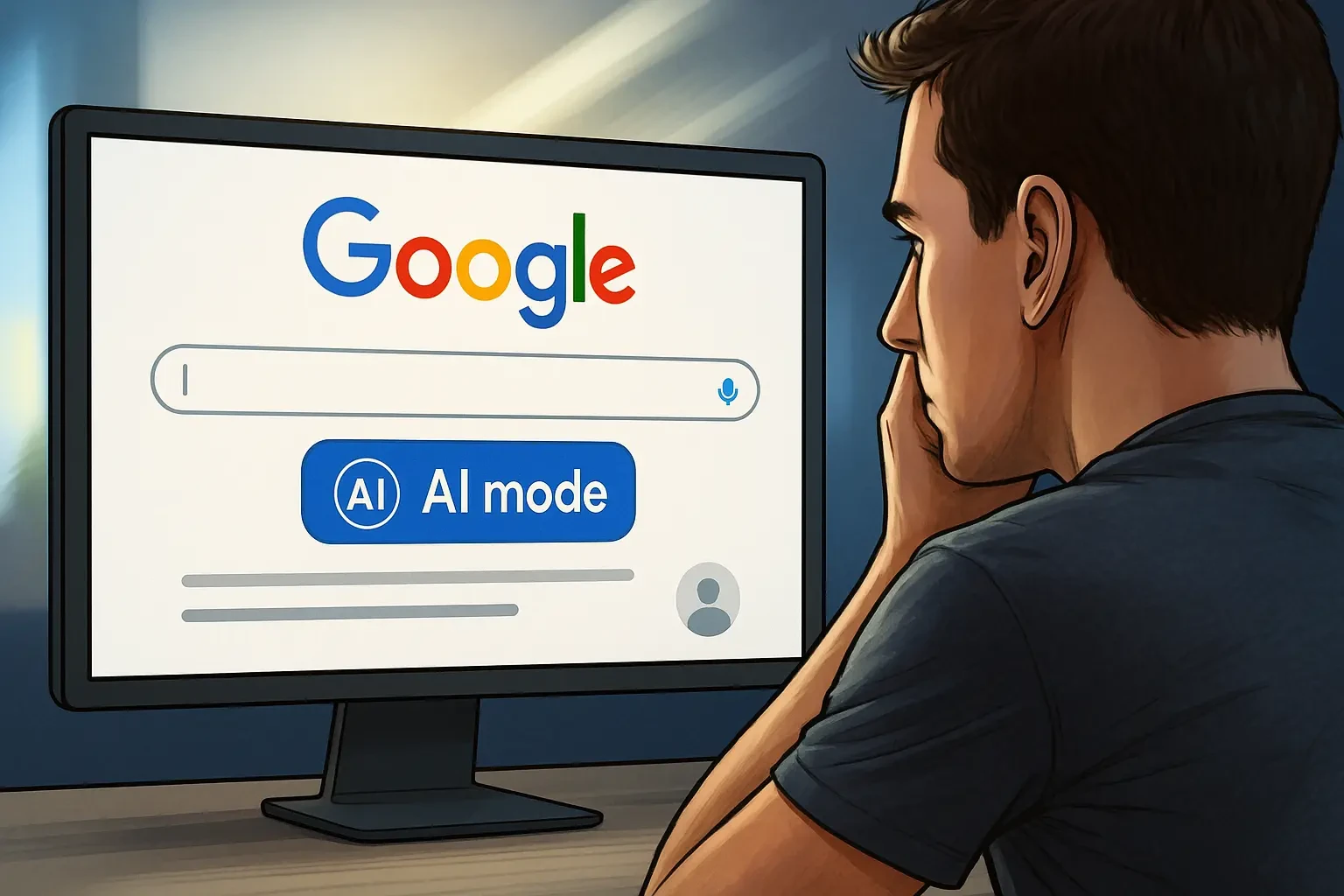
AI is killing traffic: here’s what you need to know about Google AI Mode so your business doesn’t lose customers. Today Google is no longer just a classic search engine that shows a list of blue links with keywords in the title or description. Instead, it delivers rich answers with multiple features that satisfy user intent directly on the results page. According to research by SparkToro, around 60% of queries now end without a click. In other words, users either don’t find a suitable result or get the answer immediately on Google’s own interface.
With the rollout of AI Mode (Google’s AI-powered search mode), the share of zero-click searches is likely to grow even further. That means businesses need to stop chasing “empty” traffic and learn how to generate conversions directly from Google.
“What does Google want?” is the question SEO professionals and digital marketers keep asking themselves. Today it is increasingly clear that Google is focused on keeping users inside its ecosystem for as long as possible.
In our article on SEO dynamics, we already discussed how search is evolving and how this affects SEO. Every year the pace of change accelerates, largely because of the growing role of artificial intelligence.
In 2023 Google launched the Bard chatbot, which was later rebranded and relaunched as Gemini. Gemini became the engine that started to reshape traditional search. In 2025 Google introduced AI Overviews — AI-generated summaries in standard search — and AI Mode, a deeper search experience that lets users continue the conversation directly in Search.
The key differences between these formats are shown in the table below.
| Criterion | Traditional Google Search | AI Overviews | AI Mode | Gemini (model / chatbot) |
|---|---|---|---|---|
| Main goal | Provide a list of relevant links | Give an overview-style answer to the query | Deliver deep research, comprehensive answers and comparisons | Generate text, code, images and multimodal responses |
| Result format | Links with titles and snippets | AI-generated text block at the top of the page | Extended AI-generated answer with the option to keep the conversation going | Chat interface with a continuously evolving response |
| Use of AI | Limited use (ranking, intent recognition, snippets) | Uses Gemini models to synthesize information | Uses a custom version of Gemini (2.0 / 2.5) | Acts as the main LLM and interaction platform |
| Query complexity | Best for simple facts, navigation and specific searches | Works well for simple and mid-level factual queries | Ideal for complex, research-driven queries | Best for creative, open-ended tasks |
| Information sources | Google web index | Web index and Knowledge Graph | Web index, Knowledge Graph and “query fan-out” techniques for deeper coverage | Trained on massive datasets and can tap into live search for fresh data |
| Interactivity | None (every new answer requires a new query) | None (one-off answer) | High — users can ask follow-up questions and refine results | High — built as a conversational assistant |
| Presence in Search | Main SERP results | Appears above organic results when Google deems it useful | Can replace the traditional SERP for users who have access to AI Mode | Standalone platform (gemini.google.com) and engine for Google’s AI features |
| Source links | The entire result consists of links | Always includes source links for verification | Always includes multiple source links, often more than AI Overviews | May provide links when web access is enabled |
Key changes in the sales funnel driven by Google AI Mode
- From clicks to citations. The focus is shifting from getting clicks for the sake of traffic to being cited in AI answers. With every new AI tool, it becomes more important that the chatbot or AI Mode uses your site as a source. This does not always lead to a click, but it does build authority and awareness early in the journey and moves users through your own funnel.
- Conversational marketing via AI. AI Mode becomes an intermediary between your brand and the user. People can ask follow-up questions, while your content “accompanies” them through AI citations from awareness to decision.
- E-E-A-T becomes critical. For complex queries and comparisons — exactly the type of searches that trigger AI Mode — the system will cite only the most reliable and authoritative sources. Without expert content, it is almost impossible to appear there.
What types of content help you appear in Google AI Mode?
Google AI Mode is new and still evolving. Although it is already available in Ukraine, many users have not yet switched to it. Businesses, however, should start preparing now. Throughout this article we have stressed how important high-quality, authoritative content is. So what exactly should you be publishing?
Reviews and comparisons
Google recommends using AI Mode for complex queries — when users want to compare options or make a choice. For such queries, Google can build collections on its own and also point to articles that already compare products or services.
Guides, manuals and how-to content
AI can generate step-by-step instructions by synthesizing material from across the web. You can improve your chances of being cited by:
– Using bullet and numbered lists
– Writing headings as clear, sequential steps
Even if these guides often result in “zero clicks”, you should keep producing them. They increase your visibility in AI tools and strengthen brand recognition.
FAQ content and decision frameworks
One of the main differences between AI Mode and AI Overviews is the ability to continue the search and refine results. To increase your chances of being mentioned in AI answers:
– Make sure your brand is clearly linked to the problem the user is trying to solve.
– Publish Q&A blocks on your site that address this problem in detail.
– Ensure your brand is mentioned on third-party sites in the context of solving that same problem (for example, a hotel mentioned on a tour operator’s website).
Niche expert content
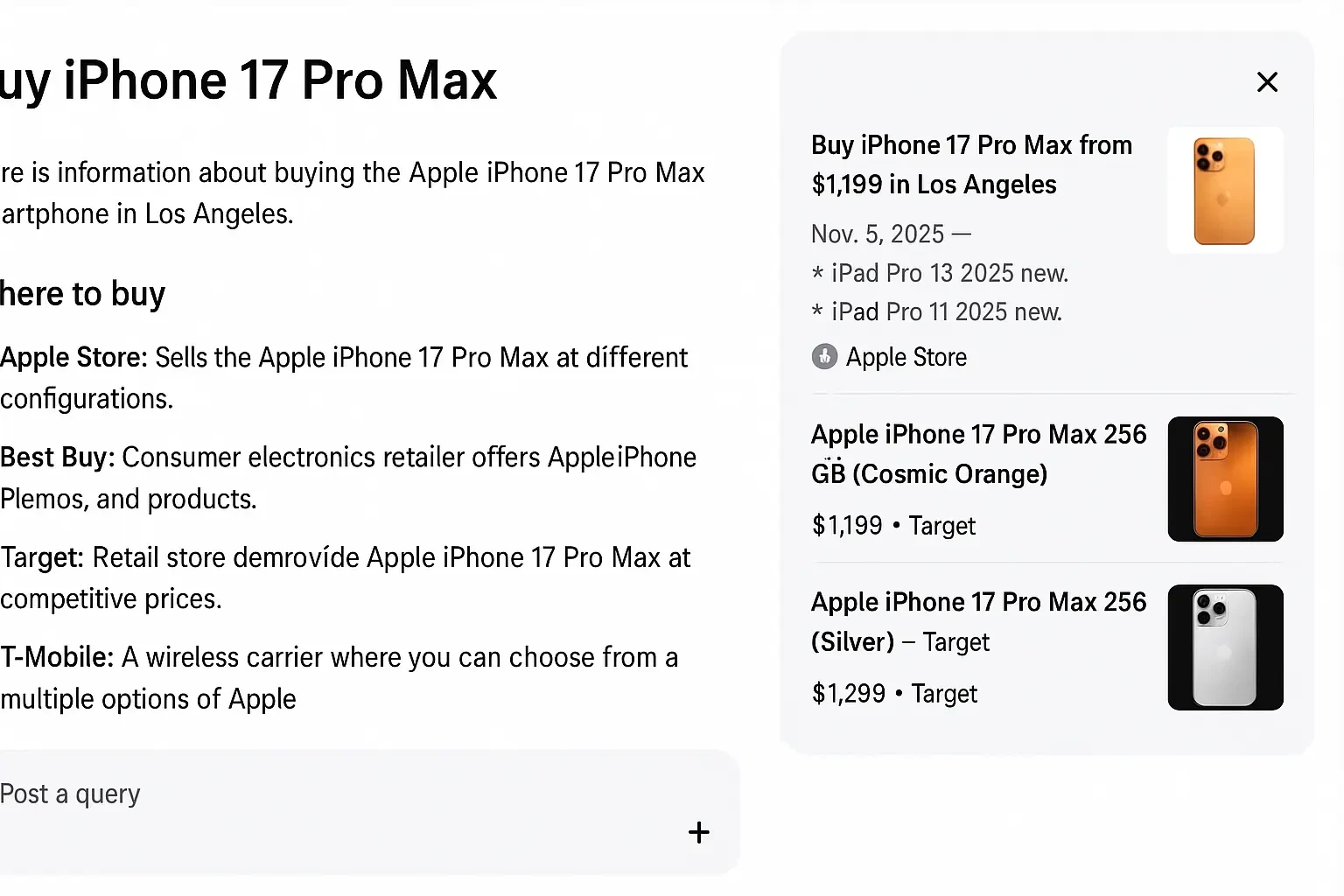
Expert content in your niche is one of the best ways to appear in AI Mode. Imagine a user searching for “gift for a 2-year-old girl”. A traditional SERP will show a shopping block (Google Shopping), sponsored results and then links to product pages. AI Mode, however, delivers a detailed answer that explains what you can buy and suggests specific products in each category. The descriptive text is generated from content on the sites that Google lists as sources.
How to create strong niche expert content:
- Cover specialized topics in depth, aiming for a complete, multi-angle view.
- Involve real experts — for example, ask a child psychologist to comment in a toy guide for toddlers.
- Use the terminology your target audience actually searches for. Don’t limit yourself to strict keywords — focus on real user needs and questions.
- Add unique data, opinions and examples so the content is genuinely valuable and engaging.
For comparison, AI answers to similar long-tail queries follow this exact pattern.
Challenges of AI Mode
AI Mode will almost certainly go through many more iterations and improvements — the technology was only launched recently. Like any AI-driven feature, it can still produce mistakes, inaccuracies and hallucinations.
One study highlighted by Ars Technica found that the rate of incorrect citations varied significantly between AI platforms, with Gemini showing the highest error rate. The research was published in early 2025, and the models have already improved since then, but it’s clear that errors will not disappear completely.
What brands should keep in mind:
- Summarization errors. AI can draw the wrong conclusions, mix up brands with similar names or merge information from different companies into one answer. You should regularly check how your brand is represented across the web and in AI citations. This can be improved by refining your PR strategy, updating data in catalogs and aggregators, and actively collecting reviews.
- Misleading or incomplete citations. AI often pulls out only part of a sentence, which may distort the meaning. For example, you offer free access to one seminar when a full course is purchased, but AI quotes “free access to all seminars”. The context is lost and the user feels misled. Proper structured data can help reduce such issues.
- Lower CTR despite higher visibility. As citations grow, click-through rates can drop. Traffic still matters, but in SEO the priority is shifting toward conversions — especially users who land on your site at the bottom of the funnel.
- Hallucinations and bias. AI synthesizes facts from many sources, which can lead to confusion: non-existent products, your items being attributed to a competitor, or an unintended preference for certain brands. You can reduce this risk by providing complete, accurate information on your own site and following a content strategy that consistently builds brand reputation.
- “Content theft” through generation. AI pulls information from available sources, paraphrases it and returns a unified answer. This is convenient for users but can mean lost traffic and potential customers for brands. Publishing unique data and original insights increases the likelihood that AI will still cite you as a source.
Even the best strategy and carefully tuned AI optimization cannot fully protect a brand from AI-driven errors. But one thing is clear: ignoring Google AI Mode and similar tools means missing out on extra visibility, conversions and competitive advantage — especially while your competitors are already being cited by AI.
Summary: how Google AI Mode is reshaping SEO
AI Mode is becoming a new entry point into search:
- Visibility goal: become a source that AI trusts and cites.
- Content strategy: focus on depth and structure that work well for extended Gemini answers — step-by-step guides, reasoned explanations and multi-layered comparisons. Pay special attention to E-E-A-T.
- Keywords: use a variety of phrasings to match different search intents and increase visibility in AI-generated results. Combine long-tail and conversational queries with shorter ones — Google often treats them as parts of one semantic topic, so cover them within a single, comprehensive piece of content.
- Technical SEO: implement structured data for products, articles and reviews so AI can read and interpret your content quickly and accurately.
Not sure where to start with AI optimization? Want to update your SEO strategy for the new search reality? The team at la-marketing.us knows how to make your content visible inside AI modes.