The outgoing year 2025 has been a triumphant one for artificial intelligence. Its all-encompassing integration has shown up in every sphere, and in marketing it has been especially powerful.
We have already talked about how the rules of reputation management and SEO promotion for brands have changed: if earlier SEO was a routine discipline where we relied only on intuition and labor-intensive analysis, today neural networks have practically turned Search Engine Optimization into an exact science.
Implementing AI makes it possible not only to instantly obtain deep analysis of user behavior, but also to forecast trends and automatically adapt content to rapidly changing search engine algorithms.
At la-marketing.us, we have already explored AI’s capabilities for brand SEO in quite some depth, and in this article we will share what we’ve learned.
Why use AI in SEO and marketing?
In the new reality, effective digital marketing without full-scale AI integration is simply impossible. Life “in digital” is developing so fast that a human alone can no longer keep up. A neural network, however, can in the shortest possible time:
- analyze millions of search queries;
- build a detailed picture of behavioral factors and the competitive landscape;
- execute highly precise targeting;
- anticipate trends instead of merely chasing them.
For business, this translates into tangible benefits: advertising budgets shrink significantly, personalized content boosts conversion, and sales grow. Most importantly, a sustainable competitive advantage is formed, even in the most saturated markets.
A brief history of AI in SEO and marketing
The evolution of the relationship and gradual merging of artificial intelligence and SEO has unfolded right before our eyes:
- Initially, algorithms were used by search engines such as Google and Yandex to rank websites and fight low-quality content and spam.
- Marketers quickly found a response to this challenge in the form of automated tools for technical audits and keyword research.
- With the emergence of modern generative neural networks, a turning point came: straightforward analytics gave way to creative work and strategic thinking.
- Marketers obtained a powerful AI tool for comprehensive optimization and for producing highly relevant content, including advertising creatives.
Key areas of AI application in SEO
The areas and methods of using neural networks for search optimization and brand promotion are constantly expanding. For now, let’s focus on three core directions of marketing transformation.
Using AI to automate SEO tasks
Analytics and data interpretation
We’ve already mentioned that artificial intelligence can not only collect massive data sets, but also find hidden, non-obvious correlations.
AI tools are able to accurately detect and analyze:
- web analytics data;
- ranking dynamics;
- competitor traffic;
- market trends.
In doing so, they form for us a holistic picture that makes it easy to forecast, for example, how changes in Google’s or Yandex’s algorithms will affect brand visibility and reputation. At the same time, AI also proposes preventive measures, allowing you to quickly address emerging risks and take control of your digital reputation.
Automation of routine processes
Neural networks can now safely be entrusted with those monotonous tasks that are easily automated:
- collecting the semantic core;
- clustering queries;
- monitoring technical errors;
- preparing reports, etc.
This not only saves SEO specialists’ time and effort – it also minimizes the human factor where absolute accuracy is required.
Content and creative generation
High-quality content has always been and remains the key component of SEO success. But if in the past AI wrote texts at the level of an elementary school student, today generative neural networks have learned to create much more than just technically correct copy:
- informative articles;
- product descriptions;
- blog posts;
- video scripts and video content itself;
- instructions, guides, presentations, and so on.
This allows a brand not to depend on the workload or “creative slumps” of human authors and to scale content production as aggressively as the strategy requires. However, to achieve the ideal balance between volume, quality and relevance, human control is still necessary.
The best model is: AI generates the basis → a copywriter checks it, adds expertise → adapts it to the brand’s real voice.
Steps for successfully implementing AI in SEO
Step 1. Run an SEO audit of the website
Start with a comprehensive diagnostic. AI tools will help you quickly identify:
- obvious technical errors such as broken links, duplicate pages, etc.;
- more complex issues with indexing, loading speed, and poor data structure.
Step 2. Build the semantic core
Successful brand promotion is impossible without a solid semantic core. Neural networks can:
- analyze the full array of user queries;
- group them by user goals and intent;
- identify the most promising niches with low competition and high demand.
This allows you to focus correctly and work only with directions that are truly promising for the business.
Step 3. Optimize text content
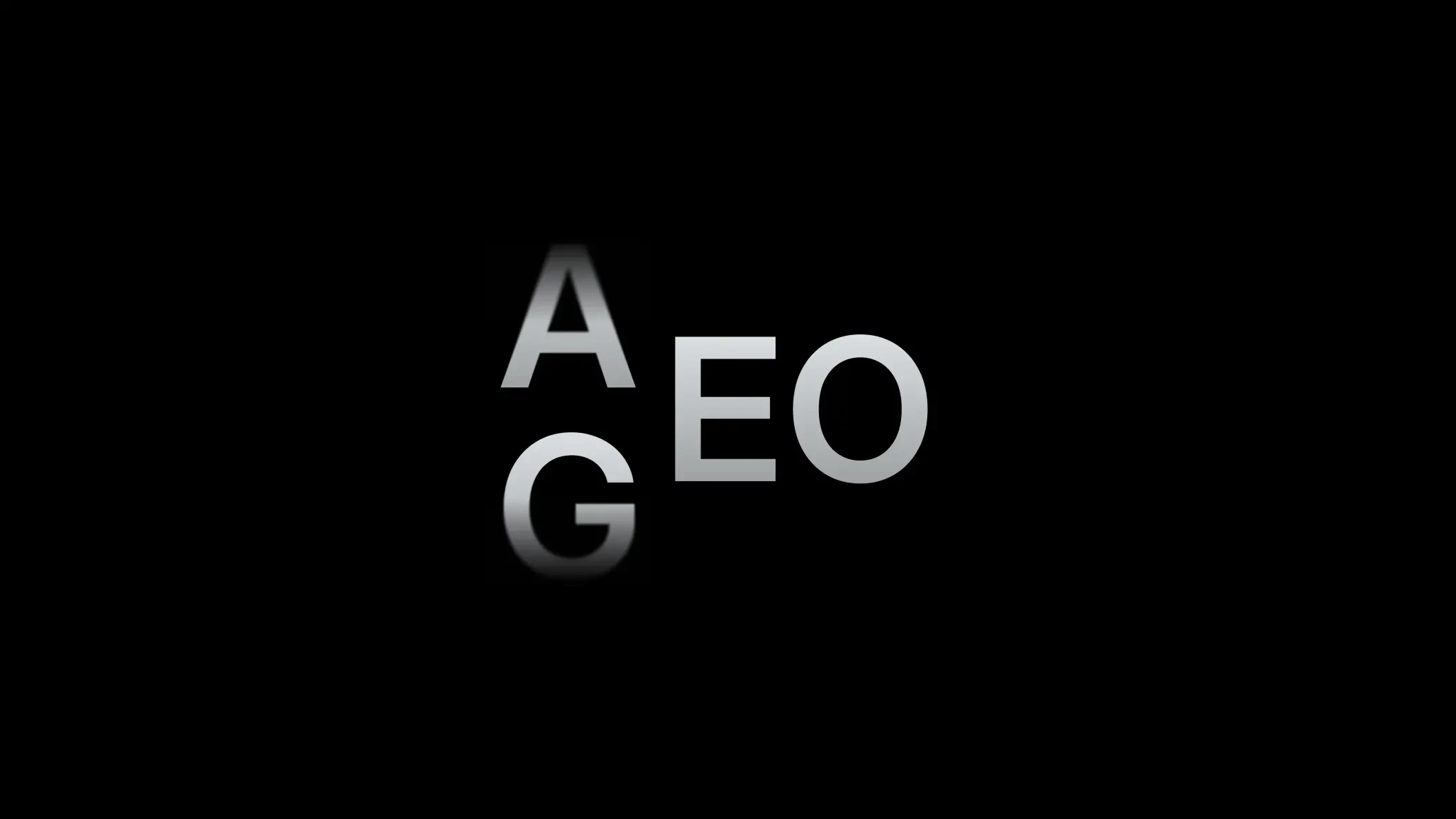
Generative AI, based on a ready semantic core, can produce relevant, useful and accurate texts that meet both user expectations and search engine requirements. This type of optimization is often called AIO or GEO (Generative Engine Optimization).
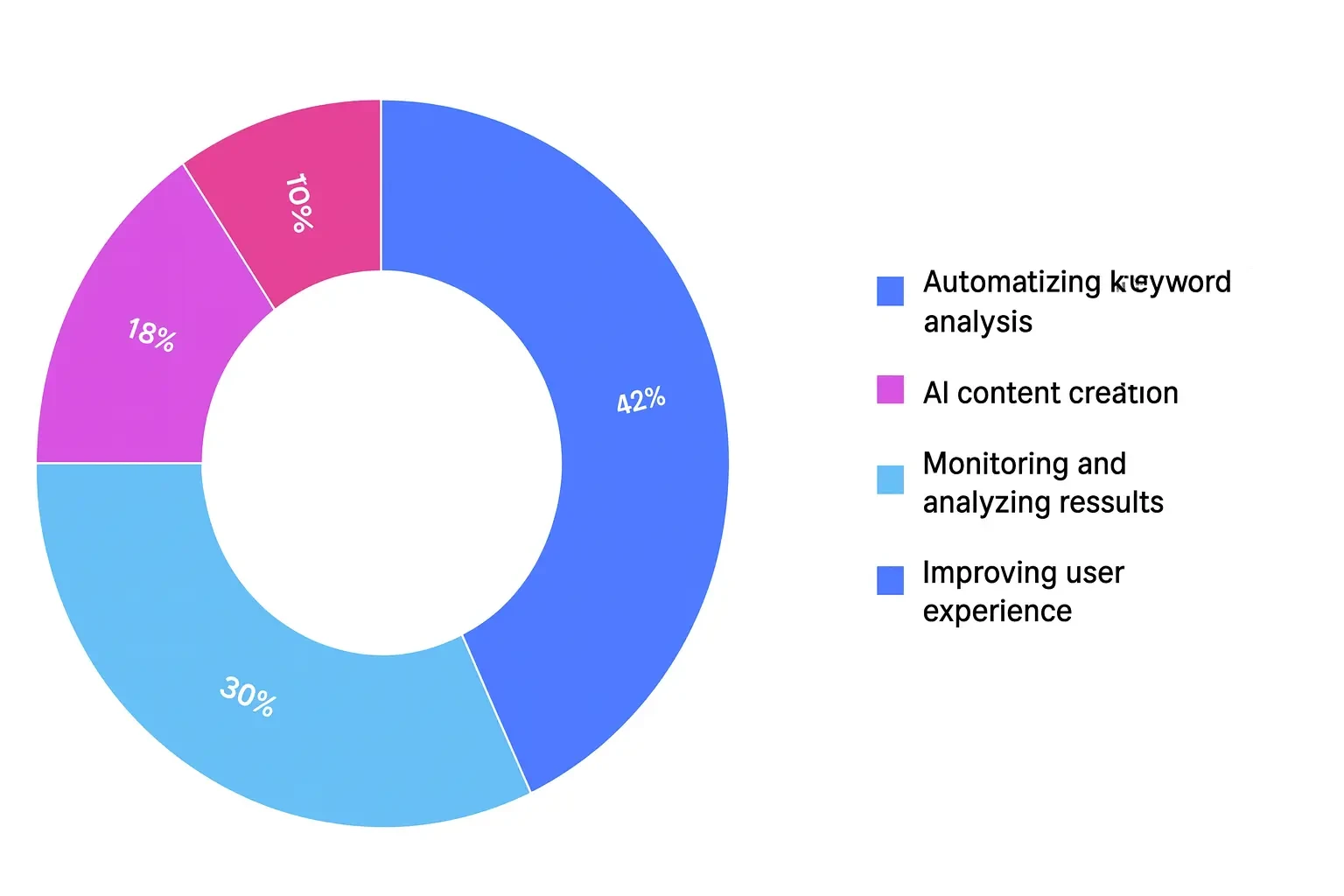
(graphic — m.seonews.ru)
Step 4. Build brand reputation
AI systems help form a strong digital reputation, influence rankings, and provide effective tools for building trust in the brand.
You can delegate to them monitoring, detection of positive and negative mentions of the brand, and the search for opportunities to be referenced in authoritative sources and to place guest posts.
Step 5. Automate and delegate promotion
You can safely hand over routine monitoring and reporting to neural networks. Simply set up automated systems that will track your website’s rankings, traffic dynamics, and technical metrics.
Popular AI tools for SEO and marketing
Of course, not all neural networks are equally useful for marketing. Let’s look at the most popular AI tools used by our specialists.
ChatGPT and its analogues
Language models such as ChatGPT and Claude, as well as their local counterparts (for example, GigaChat), are very effective for idea generation, drafting texts, building content plans, writing emails and even basic programming. Their strength lies in their versatility and understanding of context.
Creative generation tools
For visual content generation, the current leaders are Midjourney, Stable Diffusion, DALL-E and Kandinsky. They allow you to independently create visually appealing and unique creatives without having to hire expensive designers each time.
Analytics tools
Specialized platforms such as MarketMuse, BrightEdge and others analyze the top of the search results, assess how relevant your content is, and immediately provide clear recommendations for improvement. Based on up-to-date data, they indicate which changes will give the maximum growth in rankings.
|
Task |
Tool |
Description / Function |
|---|---|---|
|
Content generation |
Jasper, Writesonic |
Fast creation of articles and marketing text |
|
Analysis and optimization |
MarketMuse, Clearscope |
Topic analysis, structure building, content improvement recommendations |
|
Automation |
AirOps, Alli AI |
Large-scale optimization, integration with LLMs |
|
Technical analytics |
Adsmurai One Tag, BigQuery |
Data collection, visualization, citation tracking |
|
AI verification |
ChatGPT, Claude, Gemini |
Testing how AI interprets content |
Principles for writing effective prompts for AI
Today, you cannot get high-quality output from AI by simply copying someone else’s overused prompt. You need to master at least the basics of prompt engineering.
Here are three tips that will help you communicate more effectively with AI without any special training:
- Be specific and always provide context: not just “write an article about SEO”, but “write an introduction for an article on technical website optimization for marketing beginners who run a small product business in Tashkent.”
- Always assign a role to the AI: ask it to “act as an experienced SEO copywriter with 10 years of experience and a track record of creating viral, helpful content for Moscow restaurants.”
- Always use an iterative approach: refine and improve your prompts based on previous responses.
The future of neural networks in SEO and marketing
When it comes to predicting the future of SEO promotion in collaboration with AI, there is always a risk of underestimating the scale. But already today it is clear that:
- Total personalization is coming — AI is ready to work with each individual user.
- Search engines will shift from analyzing keywords to evaluating the completeness and expertise of answers.
- As a result, the best rankings will go to those whose content AI considers the most comprehensive and authoritative.
Frequently Asked Questions
Can we already fully entrust SEO and SMM to a neural network?
Not yet. AI is a powerful tool that eliminates routine and enhances analytics, but strategic planning, creative decisions and final content approval must remain with humans.
Are neural networks ready to completely replace SEO specialists?
They have already replaced those who dealt only with routine tasks. However, strategists, analysts and SMM specialists will still be in demand, because someone has to set the right tasks for AI and interpret its results.
Conclusion and recommendations
The integration of artificial intelligence into SEO is not a temporary trend; it is here to stay. Companies that actively embed neural networks into their marketing gain a decisive advantage in the battle for visibility in search. The only important caveat is that you should not blindly follow whatever technology suggests. To get the results your brand needs, AI must be used thoughtfully and intelligently.