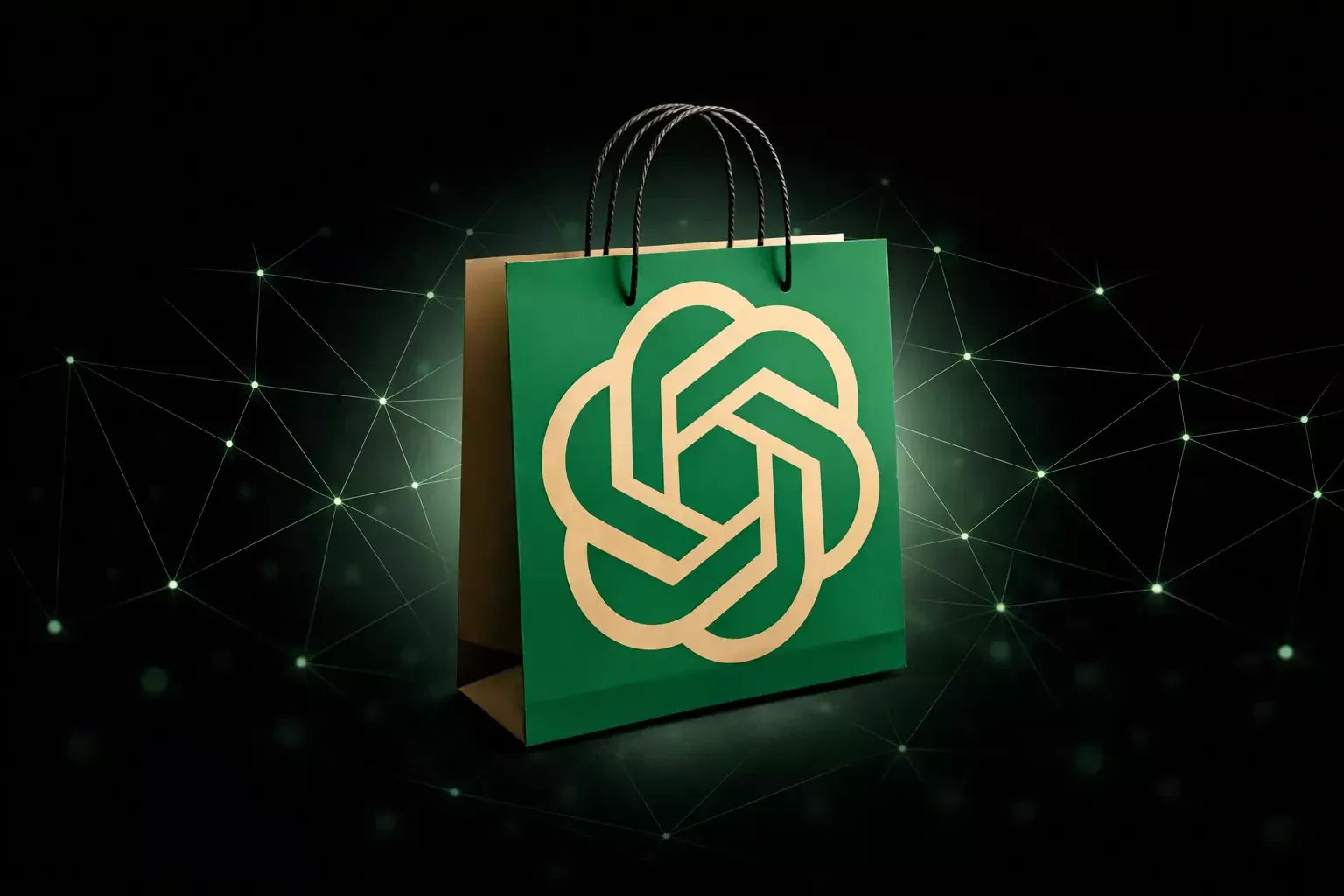
In early 2025, ChatGPT began displaying product cards with images, prices, reviews, and purchase links when it detected clear buying intent in a prompt. This feature, known as ChatGPT Shopping, quickly became one of the most talked-about new entry points in product discovery.
Profound tracked around 2 million unique prompts over several months, from September 2025 through January 2026. The goal was not just to understand whether the shopping feature triggers, but to measure how consistently it appears over time.
Two findings define the entire landscape:
1. The distribution is all-or-nothing.
79% of prompts never triggered the shopping feature across any run over the 9-month period. Only about 6% of prompts triggered consistently.
2. Once shopping triggers, it tends to stick.
If a prompt triggered shopping on a given day, there’s about an 83% chance it will trigger again the next day. Prompts effectively lock into a state and remain there.
How often does shopping actually trigger?
Across millions of prompt submissions, the shopping feature activated in roughly 9% of cases. However, the average of 8.82% hides the real story. Once we segmented prompts by type, the difference became clear.
Terminology note: in this analysis, we distinguish between two types of prompts. Open-ended prompts describe a need without mentioning a brand, such as “best business laptops with long battery life” or “lightweight running shoes for flat feet.” Brand-direct prompts include a specific brand name, such as “Nike running shoes” or “Dell XPS 15 review.”
|
Prompt Type |
Shopping Trigger Rate |
|---|---|
|
Open-ended |
12.1% |
|
Brand-direct |
3.1% |
Open-ended prompts like “best business laptops with strong battery life,” “lightweight running shoes for flat feet,” or “which socks don’t stretch after washing?” trigger shopping at a rate of 12.1%. That’s roughly 4× higher than brand-direct queries.
This doesn’t mean brand queries lack purchase intent. If a brand query clearly describes a product need, shopping can still trigger. However, when brand queries refer to services, reviews, or anything that isn’t a tangible product, shopping almost never activates. This is what pulls the average for brand-direct prompts down to 3.1%.
Key implication for brands: ChatGPT Shopping is not a traditional brand search engine — it’s a discovery surface. You don’t win by being the brand users search for by name. You win by appearing in the consideration set when users are still describing their needs and haven’t yet decided what to buy.
The critical question: can you rely on it?
Everything above is a snapshot in time — millions of prompts at a single moment. But brands build strategies across months and quarters. So we repeatedly tested around 2 million prompts over several months to answer two key questions:
Does shopping appear for your prompts at all?
And if it does, will it continue to appear?
The answers are very different.
Most prompts never enter the game
The consistency distribution across approximately 2 million prompts is striking.
|
Stability Bucket |
Number of Prompts |
% of Prompts |
Avg. Trigger Rate |
|---|---|---|---|
|
Always triggers |
14,927 |
0.72% |
100% |
|
High (80%+) |
116,702 |
5.65% |
91.13% |
|
Medium (50–80%) |
56,638 |
2.74% |
65.44% |
|
Low (20–50%) |
70,897 |
3.43% |
33.54% |
|
Rare (<20%) |
165,697 |
8.02% |
5.58% |
|
Never triggers |
1,640,630 |
79.43% |
0% |
79% of prompts never triggered shopping across the entire 9-month study. On the opposite end, only 0.7% triggered every single time. The “reliable” tier — prompts that trigger in 80%+ of cases — accounts for roughly 6% of all prompts.
In other words, there’s a massive cluster at zero and a small cluster at the top, with very little in between.
What do these top-performing 6% of prompts have in common? Directionally, they tend to describe a specific, concrete product need that can be mapped to a real SKU. A deeper breakdown of these high-trigger prompts will follow in the next analysis.
But when shopping triggers, it’s surprisingly sticky
This is where things get interesting. If a prompt triggers shopping on a given run, there’s about an 83% chance it will trigger again the next day. The inverse is just as stable: if a prompt doesn’t trigger shopping today, there’s only about a 1.7% chance it will start triggering tomorrow.
In simple terms, prompts lock into a state and stay there. This is exactly what creates the all-or-nothing distribution. The 79% “never” and the ~6% “always/high” groups are not random — they are self-reinforcing states. Once a prompt lands on one side, the system tends to keep it there.
What this means for brands
Classify before you optimize.
Collect real prompts your customers would use. Test them repeatedly over several weeks. Around 80% of prompts will never trigger shopping.
Your branded queries matter less than you think — unless they describe a product.
Brand-direct prompts trigger at 3.1% on average, compared to 12.1% for open-ended queries. If a branded query clearly describes a physical product, it can still trigger shopping consistently. But if it refers to services, reviews, or anything non-shippable, shopping will almost never appear.
Short-term persistence is real, but not permanent.
If your prompts trigger today, there’s about an 83% chance they will trigger tomorrow. However, model updates can reset your visibility overnight. The brands that win are those that detect changes quickly and adapt.
Conclusion
For the consistency analysis, we tracked approximately 2 million unique prompts, each with at least 10 runs over the same period, measuring how often each prompt triggered shopping across repeated tests. ChatGPT Shopping is not about brand search — it’s about the decision stage. Brands that optimize for open-ended queries and real user needs gain the highest visibility in AI-driven product discovery.