Short answer: if you completely stop optimizing your website for 12 months, it probably will not collapse overnight, but it will gradually begin to lose rankings, organic traffic, leads, and visibility in Google Search, Google AI Overviews, and other AI-generated answers.
In most cases, the first problems become noticeable after 4–6 months, and by 9–12 months the impact is already affecting revenue, cost per lead, and overall business competitiveness.
What happens to a website without SEO in the first 3 months
During the first 1–3 months, it may seem like nothing serious is happening. Rankings often still hold, traffic does not drop sharply, and leads continue to come in.
This creates the dangerous illusion that SEO can be paused without consequences. In reality, during this period the site is usually still benefiting from previously accumulated authority: old content is still ranking, external links are still working, and competitors have not yet fully overtaken you.
The main risk at this stage: the business draws the wrong conclusion that SEO is no longer necessary, even though the decline is already starting to build in the background.
What happens after 4–6 months
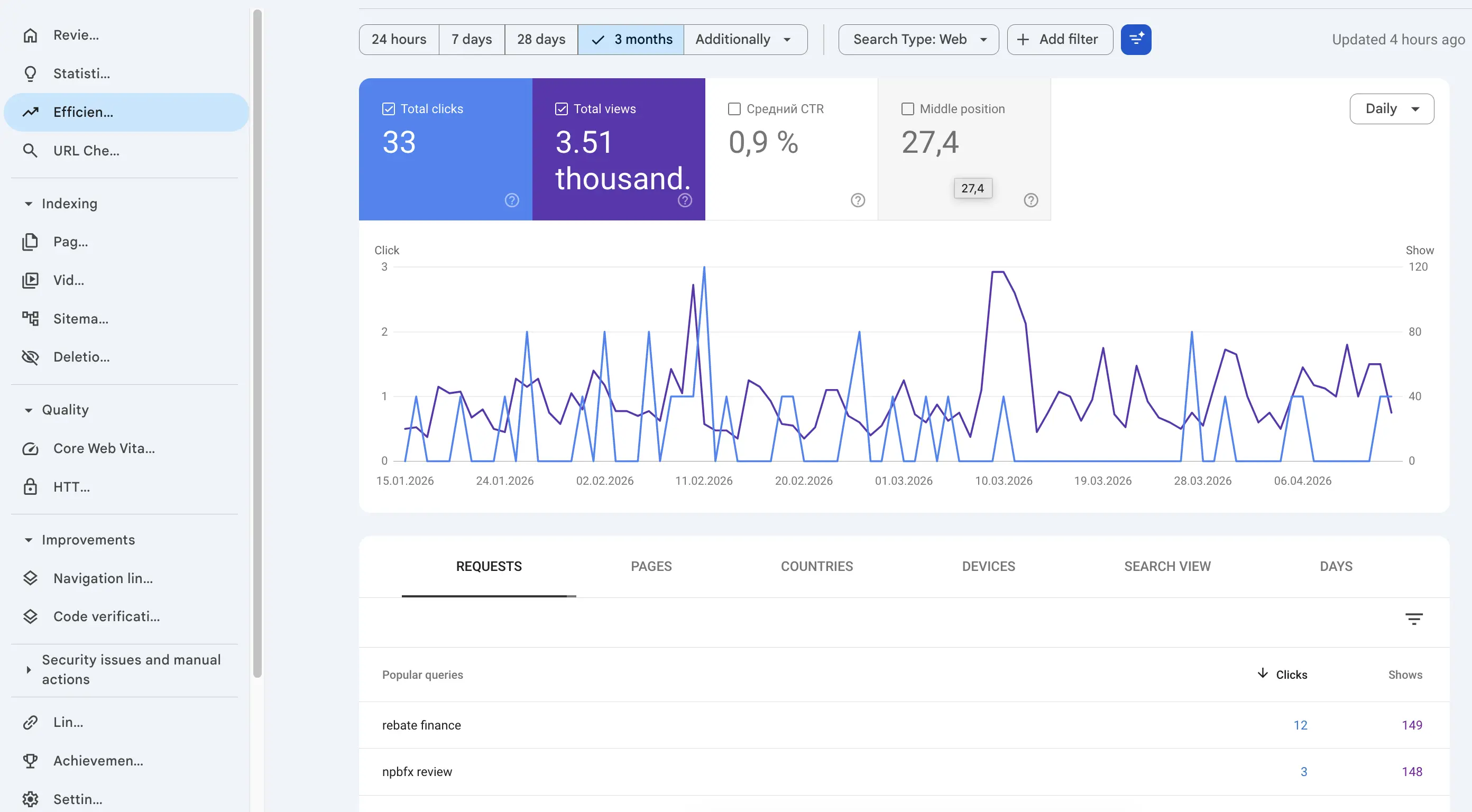
After a few months, the consequences become more visible. If the site is not being updated while competitors continue improving content, technical SEO, and page structure, Google starts giving them more visibility.
At this stage, the following changes usually happen:
- competitors start overtaking the site for commercial and informational keywords;
- older articles, category pages, and landing pages become outdated;
- search snippets become less attractive;
- some external links are lost, and the backlink profile weakens;
- organic traffic may decline by around 15–25%.
Brief conclusion: when SEO is stopped, a website usually starts losing relevance before the business owner even notices it.
What happens after 7–9 months
At this stage, the decline often accelerates. As the site loses rankings for some important keywords, it gets fewer clicks, less engagement, and fewer new quality signals. Competitors, meanwhile, continue strengthening their pages and securing higher positions.
Because of this, the decline may become not just linear, but increasingly faster. This is especially visible in competitive niches where content freshness, expertise, technical stability, and ongoing page improvements matter.
What this means in practice: a website that used to receive steady organic traffic can lose a significant share of its search visibility within a few months. And recovery almost always takes longer than the period of inactivity itself.
What happens after 10–12 months
If SEO is not resumed within a year, the consequences become strategic. This is no longer just a drop in a few pages, but a decline in the overall strength of the website as a search asset.
A typical end-of-year scenario looks like this:
- organic traffic drops by 50–70% compared to peak performance;
- some core keywords fall beyond the first page of Google;
- cost per lead rises because the business has to rely more heavily on paid advertising;
- the site appears less often in enhanced search features and Google AI answers;
- the project’s overall search resilience declines noticeably.
Direct conclusion: after 1 year without website optimization, a site usually loses not only traffic, but also part of its commercial effectiveness.
Why stopping SEO is especially risky in the Google AI era
Today, a website is not competing only for positions in traditional search results. It is also competing for inclusion in Google AI Overviews, instant answers, enhanced search features, and other AI-driven formats where Google selects the clearest, best-structured, and most up-to-date sources.
For content to be used more often in Google AI answers, pages need to be:
- up to date;
- clearly structured;
- useful and specific;
- technically accessible for crawling and indexing;
- regularly updated.
If a website has not been developed for a long time, its chances of visibility in AI search also decline.
Example of financial losses without SEO
Let’s say a website generates 30 leads per month from organic search. If the project loses around 60% of that traffic over a year without SEO, you can estimate the scale of the lost opportunity.
Calculation:
30 × 0.6 × 12 = 216 lost leads per year
If the average order value is $600, then the potential lost revenue would be:
216 × $600 = $129,600
Even if your actual business numbers differ, the logic remains the same: the losses from stopping SEO are often greater than the short-term savings in budget.
Is SEO an expense or an asset?
Short answer: SEO is an asset.
SEO builds long-term search visibility, attracts organic traffic, reduces dependence on paid channels, and improves business resilience in search. When the work stops, that asset does not disappear in one day, but it does gradually lose value.
That is why stopping SEO is not simply a cost cut. In many cases, it is the beginning of a gradual loss of traffic, leads, sales, and market share.
When can a pause in SEO be justified?
Sometimes, a temporary pause in SEO can make business sense. For example:
- during a complete change in the business model;
- during a large-scale redesign or website migration;
- when changing the URL structure and overall site architecture;
- when the budget is temporarily redirected into another growth channel with a clear return timeline.
But even in these cases, the pause should be a calculated decision made with a clear understanding of the consequences, not a hope that the site will keep growing on its own.
Conclusion
If you completely stop the work, a website usually keeps performing only for a limited time. After that, it starts losing to competitors, becoming less relevant to Google, and dropping out of more visible search formats, including AI-generated answers.
Main takeaway: website promotion should not be treated as a one-time setup. It is continuous work on a digital asset that either grows or gradually weakens over time.
If a business chooses to pause, it is important to understand in advance not only the budget savings today, but also the cost of losing traffic, leads, and revenue tomorrow.