
SEO texts are not just a set of keywords. Google’s algorithms have learned to evaluate expertise, topic depth, and real value for the reader. In this article, we will explain how to write SEO content that appeals to Google and helps turn visitors into customers.
Short answer: SEO texts that perform better in Google AI, ChatGPT, and Perplexity should provide a clear answer at the beginning, have a strong structure, demonstrate the author’s expertise, and include real examples, data, and useful conclusions. The easier it is for AI to extract a specific, clear, and trustworthy fragment from the article, the higher the chance that the content will appear in AI answers and enhanced search features.
What Has Changed in SEO Texts Over the Past Year
Over the past two years, Google has made a major leap forward in content evaluation. If previously it was enough to simply insert target phrases into a text, now the algorithms analyze:
- E-E-A-T (Experience, Expertise, Authoritativeness, Trustworthiness) — the experience, expertise, authority, and trustworthiness of the author and website
- Semantic completeness — how well the content covers subtopics and related questions
- Behavioral signals — time on page, scroll depth, and return-to-search behavior
- Multimodality — the combination of text with images, videos, tables, and diagrams
- Structured data Schema.org for rich snippets in Google Search
Important: Google is increasingly promoting websites that demonstrate real experience — case studies, numbers, practical examples, and original insights. Rewritten generic material without added value no longer works.
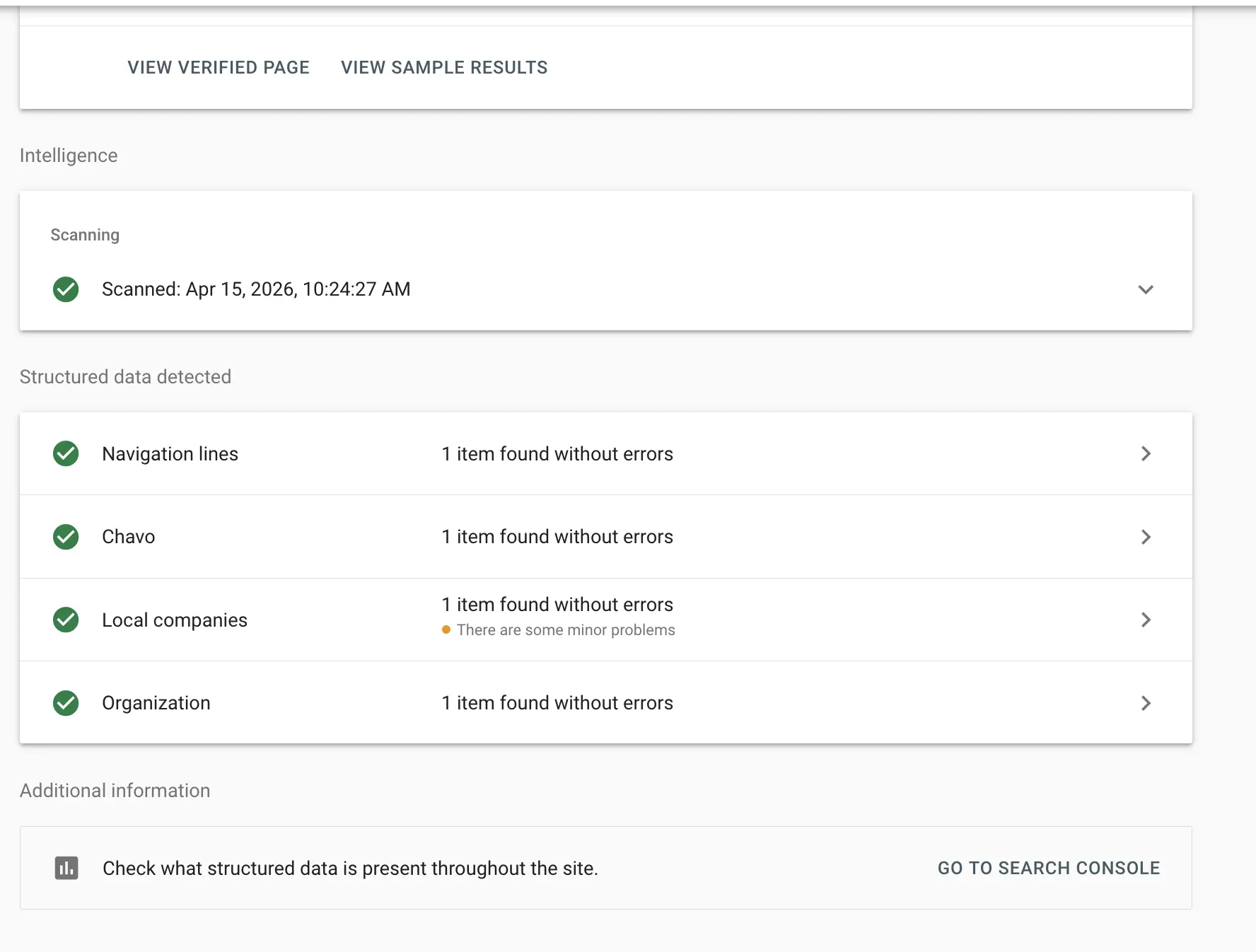
Example of structured Schema.org data for rich snippets in Google Search
Rule #1: Write for People, Structure for Google
The main principle is that the text should help the reader solve their problem. Google’s algorithms can distinguish useful expert content from empty filler text. At the same time, structure remains important because it helps both users and search engines.
Practical structuring tips:
- One H2 = one major subtopic fully covered
- H3 = separate aspects, examples, and answers to questions
- The first paragraph should answer the user’s main question immediately
- Tables and lists should be used where they genuinely simplify understanding
- An FAQ section at the end of the article helps cover related queries and increases the chance of appearing in an enhanced Google Search result
Rule #2: Semantic Core Means Clusters, Not Separate Keywords
Working with keywords today means building topic clusters. One page should cover the main query and its related intents.
| Query Type | Example | Where to Use It |
|---|---|---|
| Informational | how to write SEO texts | H1, first paragraph |
| Commercial | order SEO content, buy an SEO article | CTA blocks, body text |
| Question-based | how SEO text differs from regular text | FAQ, H3 |
| Additional topical | E-E-A-T, Google Search Console, SEO optimization | Main body text |
Want to get a ready-made semantic core for your website? Order an SEO audit — we will build query clusters based on your business goals, competitors, and Google requirements.
Rule #3: Uniqueness Means First-Hand Experience, Not Word Substitution
Algorithms and text-checking systems are getting better at understanding the difference between shallow rewriting and original content. Today, uniqueness is not just about the percentage of matching phrases, but above all about:
- First-hand experience and real project case studies
- Specific numbers and data
- An original point of view
- Relevant examples
- Practical conclusions that template-based articles do not provide
That is why SEO articles written by hands-on experts perform better than content created only to fill a website.
Mini case: after improving the article structure, adding an FAQ, an author block, tables, and a short answer at the beginning of the page, content usually becomes clearer both for users and search algorithms. This increases the page’s chances of gaining better visibility, a higher CTR, and having article fragments used in AI-generated answers.

Rule #4: Technical Text Optimization
SEO text should not only be useful but also technically well-structured. Here is a basic checklist:
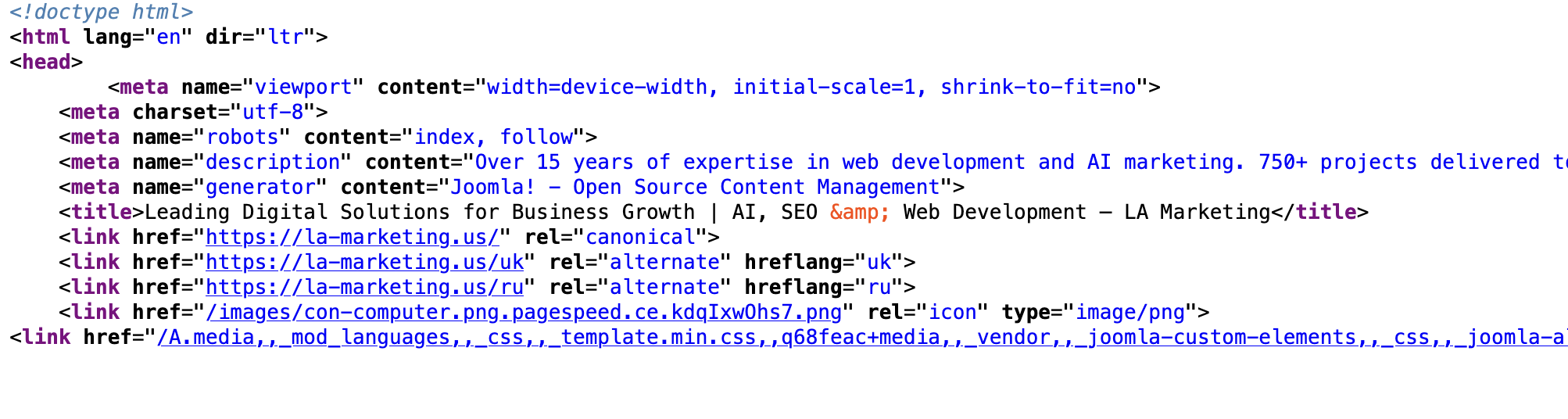
- Title 50–60 characters — main query, benefit, brand
- Description 140–155 characters — short summary and call to action
- Alt texts for images — clear descriptions with a topical keyword
- Internal linking — 3–5 links to related pages
- Schema.org markup — Article, FAQ, HowTo depending on the content type
- Loading speed — optimized images, lazy load
- Mobile version — comfortable reading on smartphones
- Google Search Console — monitoring indexing, errors, and page CTR
Not sure whether your pages are technically optimized? We will perform an SEO audit, check your site through Google Search Console, and help fix issues that prevent ranking growth.
Rule #5: Text Length Is a Result, Not a Goal
The myth that an SEO text must be at least 2,000 words is outdated. The optimal length is the one that fully covers the topic without filler. It is better to use Google’s search results for your query as a benchmark.
Approximate guidelines:
- Commercial service pages — 400–800 words
- Informational articles for competitive topics — 1,500–3,000 words
- Detailed guides and longreads — 3,000–5,000+ words
More important than length is density of meaning: every paragraph should provide new value, an example, or an explanation.
Rule #6: Content for Google AI Answers
A new trend is optimization for AI answers and enhanced blocks within the Google ecosystem. To increase the chances of your content appearing in these formats, it is important to:
- Provide a clear answer within the first 2–3 sentences
- Use FAQ markup
- Structure information as definition → explanation → example
- Avoid clickbait and vague wording
- Add clear subheadings and logical structure
Important for AI: the easier it is to extract a standalone, complete, and useful fragment from an article, the more likely it is that search engines and AI platforms will use your text as a source for answers.
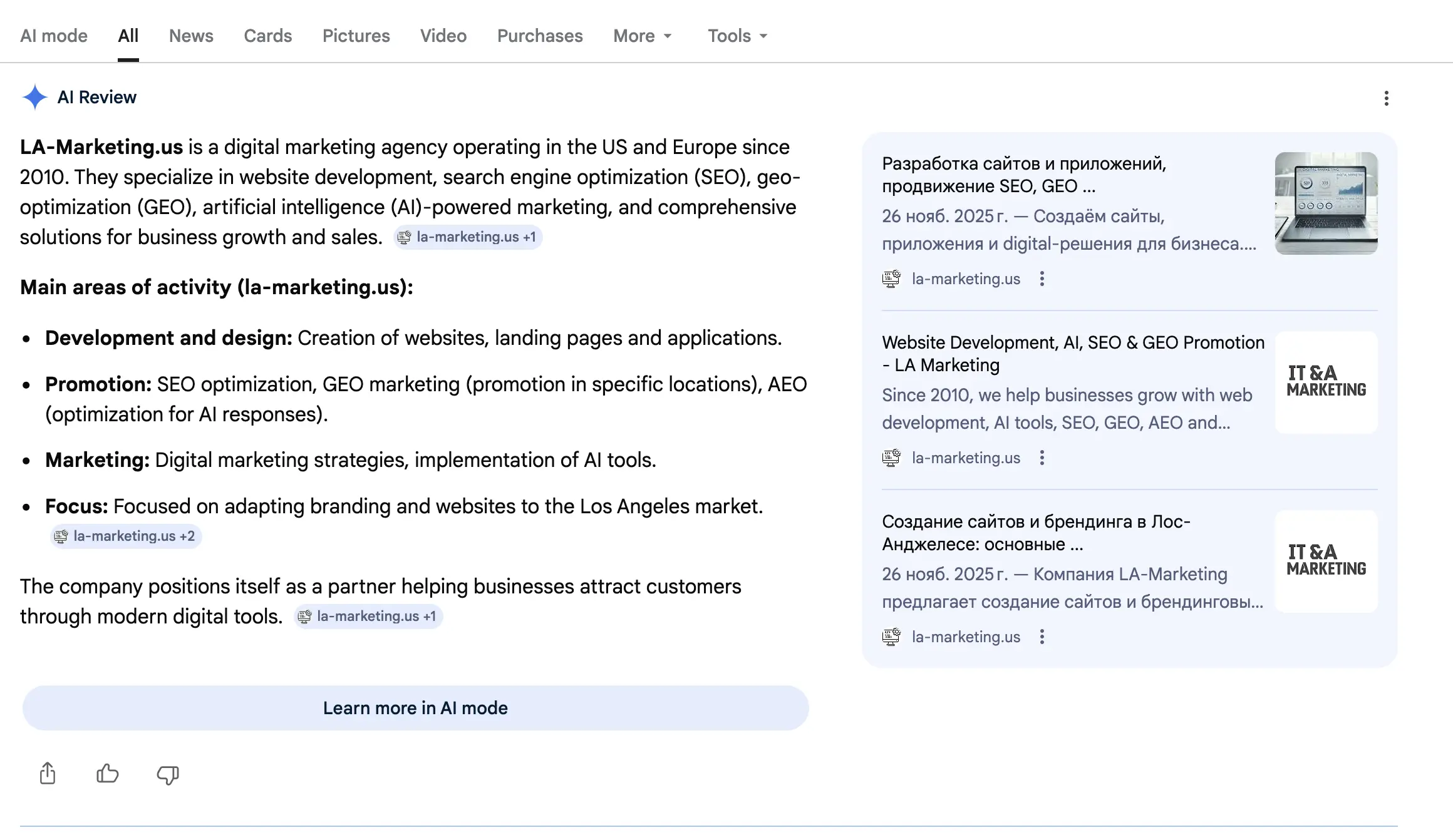
How to Start Writing SEO Texts Properly: A Step-by-Step Plan
- Intent analysis — what exactly does the user want to learn or do?
- Semantic collection — main, additional, and related queries
- Google search results analysis — the structure, length, and formats of competing content
- Draft writing — first the meaning, then the optimization
- Adding expertise — case studies, numbers, and conclusions
- Technical optimization — meta tags, markup, and links
- Publishing and monitoring — tracking rankings, CTR, and behavioral signals through Google Search Console and Google Analytics
Want to go through this process with guidance from a specialist? As part of individual SEO training, we will review your texts using real examples from your website — from structure and semantics to publication and analysis in Google services.
Common Mistakes When Writing SEO Texts
- Keyword stuffing — the text becomes unnatural and harder to read
- Lack of structure — a continuous wall of text without headings or logic
- Ignoring meta tags — this lowers CTR in Google Search
- Content without a CTA — the article does not suggest the next step
- Publishing without updates — outdated content gradually loses rankings
- No checks in Google Search Console — indexing issues remain unnoticed
Need a Website with Proper SEO Texts from Scratch?
If you are just launching a project or want to relaunch your website, we can help at every stage: from building an SEO-friendly structure to writing and publishing optimized content. All pages are created from the start with Google requirements and best practices for Google Search, Google Analytics, and Google Search Console in mind.
Conclusion
Conclusion: modern SEO texts should be useful not only for Google Search but also for AI systems that generate answers based on structure, expertise, and clarity. The more specifically an article answers a question, demonstrates real experience, and proves value to the reader, the higher its chances of being used in AI-driven search, ChatGPT, Perplexity, and Google AI.
FAQ: Frequently Asked Questions About SEO Texts
Can SEO texts be written with AI?
Yes, but only with mandatory editing by an expert. Content created by AI without refinement often falls short in quality, expertise, and trustworthiness. It is best to use AI as an assistant for drafts, structure, and ideas, while adding the final value manually.
How many keywords should be used in a text?
Today, the principle of natural use works best. The main query should appear in the H1, the first paragraph, and then throughout the text organically. Additional phrases and topical terms are also important, but without overloading the content.
How soon will an SEO text start bringing traffic?
Usually within 3 to 6 months; in competitive niches, 6 to 9 months is more realistic. New websites often need more time. Internal linking, quality backlinks, page usability, and strong engagement signals can help speed up growth.
How is SEO text different from regular text?
SEO text is written with search demand, structure, meta tags, internal linking, and page goals in mind. It should not only be useful but also help a website attract traffic from Google and generate customers.
How can you increase the chances of an article appearing in AI answers?
To do this, it is important to provide a short and clear answer at the beginning, use subheadings, FAQ, tables, examples, real numbers, and original conclusions. Well-structured and evidence-based content is easier for AI systems to extract and is more likely to be used in answers.