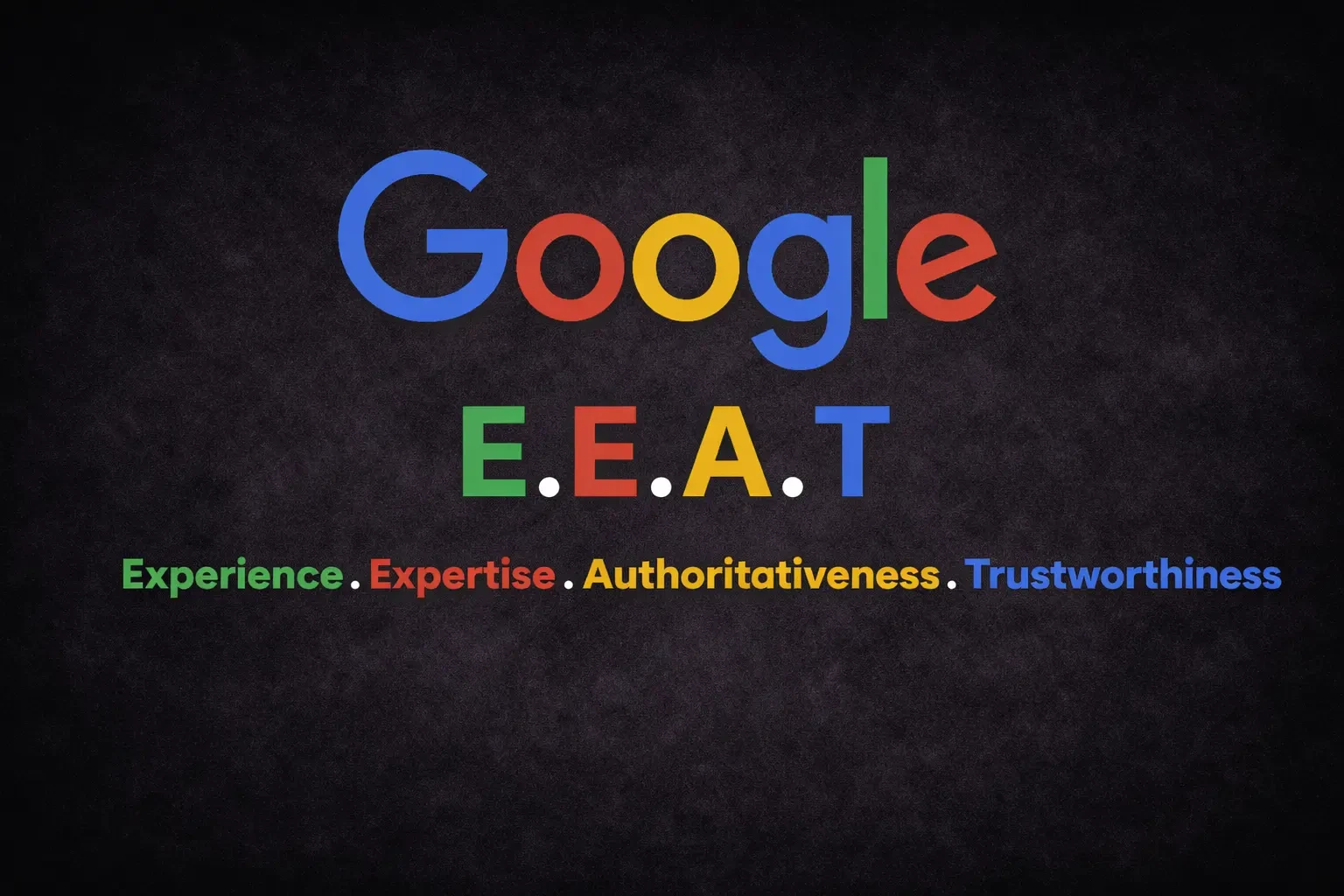
Google does not trust anonymous content: how to implement E-E-A-T in your content and increase trust in your website. If a user cannot quickly understand who wrote the article, why this author should be trusted, and what the conclusions are based on, the page loses quality signals in the eyes of the search engine. That is exactly what the E-E-A-T concept reflects: Experience, Expertise, Authoritativeness, Trustworthiness. In this article, we will break down how to build E-E-A-T signals into your content so that Google sees a real expert, not a faceless SEO text.
What Is E-E-A-T and Why It Matters for Google
E-E-A-T is a content quality framework Google uses when evaluating pages. It is especially important for topics related to money, health, law, safety, and business - in other words, content that can affect a user’s decisions and well-being.
The letter E (Experience) was added later to distinguish purely theoretical texts from content written on the basis of real hands-on experience. For example, a review of a service, tool, or restaurant written by someone who has actually used it carries more value than a generic rewrite.
| Component | What Google Evaluates | Where It Shows Up |
|---|---|---|
| Experience | Whether the author has personal practical experience | Case studies, examples, photos, screenshots, real-world insights |
| Expertise | How deeply and accurately the topic is covered | Terminology, figures, methodology, specific instructions |
| Authoritativeness | Whether the author or brand is recognized by others | Mentions, links, publications, expert profiles |
| Trustworthiness | Whether the page and website can be trusted | Sources, transparency, contact details, site policies, HTTPS |
Experience: How to Show You Have Actually Done This
The strongest way to demonstrate experience is to write with specifics and from practice. Not "experts recommend," but "in our project for an online building materials store, organic traffic grew 4x in 8 months after restructuring the site and content."
Google is good at distinguishing a compilation of other people’s thoughts from content backed by real experience.

Practical Markers of Experience in Content
- personal examples and stories from real work;
- specific numbers from actual projects;
- descriptions of mistakes, failures, and unusual situations;
- photos of the process, interfaces, and analytics;
- dates, milestones, and chronology.
Expertise: Depth Matters More Than Length
Expertise is not about word count. Google evaluates how well the content actually helps the user solve a problem. A shallow 3,000-word article will lose to a sharp 1,500-word breakdown if the second piece includes specific actions, clear explanations, logic, and practical value.
How to Strengthen Expertise in Content
- use professional terminology, but explain it in plain language;
- reference primary sources: research, official statistics, and Google documentation;
- provide step-by-step instructions instead of vague recommendations;
- point out limitations and exceptions - a real expert knows when a rule does not apply;
- update your content and include the last updated date.
Good expert content does not try to sound smart. It helps the reader understand the topic faster, avoid mistakes, and make better decisions.
Authoritativeness: Who Knows You and Why They Refer to You
Authoritativeness is built not only inside the article but also beyond it. It includes links from other websites, brand mentions, the author’s profile, activity in the professional space, and the company’s digital footprint.
But you can also lay a strong foundation for trust directly on the page.
Authoritativeness Checklist for a Page
- an author block with a photo, job title, and profile link;
- links to other related articles on your website;
- mentions of publications, interviews, awards, or speaking appearances;
- logos of clients, partners, or media outlets that have cited you;
- years in business, specialization, and geographic reach.
If a website looks like a collection of faceless pages with no author, no history, and no context, trust will be lower even if the text itself is well written.
Trustworthiness: Facts, Transparency, and Proof
Trustworthiness is one of the most important components of E-E-A-T. Any claim without a source looks like an unsupported opinion. This is especially critical in topics related to finance, medicine, law, education, and business.
What Increases a Page’s Trustworthiness
- links to official sources: Google documentation, government statistics, and industry research;
- a clear publication date and update date;
- contact details for the company and the author;
- a privacy policy, legal information, and business details;
- reviews from real clients with names and, if possible, photos;
- a secure HTTPS protocol and technically sound website performance.
Important: if a website has technical issues, broken links, indexing problems, or an insecure connection, no text-based E-E-A-T signals will work to their full potential. First fix the technical foundation, then strengthen the content.
E-E-A-T in Content: 10 Practical Techniques
Here are practical methods that can be implemented on almost any website:
- Author bio block - at least a few lines with a photo, title, experience, and a link to LinkedIn, a website, or a professional profile.
- Publication and update dates - placed at the top of the article so both readers and Google can see the freshness of the content.
- Source list - at the end of the article, similar to research publications.
- Real numbers - "traffic increased by 340%" instead of "traffic increased significantly."
- Structured contents - with anchor links and a clear article outline.
- FAQ block - answering real user questions collected through Google Search, Search Console, comments, and client requests.
- Multimedia content - video, podcast, screencast, or expert commentary.
- Internal linking - links to other expert articles and service pages on the site.
- Client reviews and quotes - as proof of real-world experience.
- Avoiding template copy - uniqueness should be not only formal, but semantic as well.
Mistakes That Destroy Google’s Trust
Even strong content can lose visibility if the page contains common low-trust signals:
- Anonymity. "Site editorial team" with no name, no face, and no credentials is a weak trust signal.
- Outdated information. An article left unupdated for years quickly loses value in sensitive topics.
- Generic statements without specifics. Phrases like "SEO helps businesses grow" prove nothing.
- No sources. If you make an important claim, you need to show what it is based on.
- Contradictions across pages. If one URL says one thing and another says the opposite, trust in the entire domain drops.
Where to Start with E-E-A-T Implementation
The easiest way to start is not by rewriting every text on the site, but by diagnosing the current state. You need to understand which pages already have strong trust signals and which ones still look weak and anonymous.
What to Check First
- whether articles have real authors and clear profiles;
- whether publication and update dates are shown;
- whether there are links to trustworthy sources;
- whether conclusions are supported by examples, screenshots, and case studies;
- whether there are technical issues affecting trust in the site.
After that, you can build a full content strategy: rework key pages, strengthen expert articles, add author sections, and develop a broader trust system across the website.
LA Marketing Services That Strengthen Website Trust and Improve Google Rankings
Website expertise is shaped by more than just content. Results depend on the project’s technical health, page structure, content quality, search visibility, and how convincing the brand looks to both users and search engines.
SEO Website Audit
We identify technical and content issues that cause your site to lose trust, visibility, and leads.
Website and Brand Promotion in Search and AI
We help businesses get traffic from Google and new AI channels through strong SEO and GEO strategies.
SEO Articles and Expert Blog Content
We create useful content that strengthens E-E-A-T, matches audience intent, and expands organic visibility.
Custom Website Development
We build websites with strong structure, fast loading speed, intuitive navigation, and trust elements that support business growth.
Conclusion: Expertise Is Not a Style, It Is a System
E-E-A-T is no longer an abstract SEO theory. For Google, it is a practical trust framework: who wrote the content, whether the author has real experience, whether the claims are backed by sources, and whether the website as a whole looks like a reliable resource.
The main mistake most websites make is trying to improve rankings only by increasing text volume. Today, a better approach is concrete case studies, a visible human author, transparent sources, update dates, and overall consistency across the site’s content.
The most important point is that E-E-A-T cannot be implemented with a single edit in an article template. It requires systematic work across content, site structure, author pages, technical quality, and the brand’s overall reputation.